
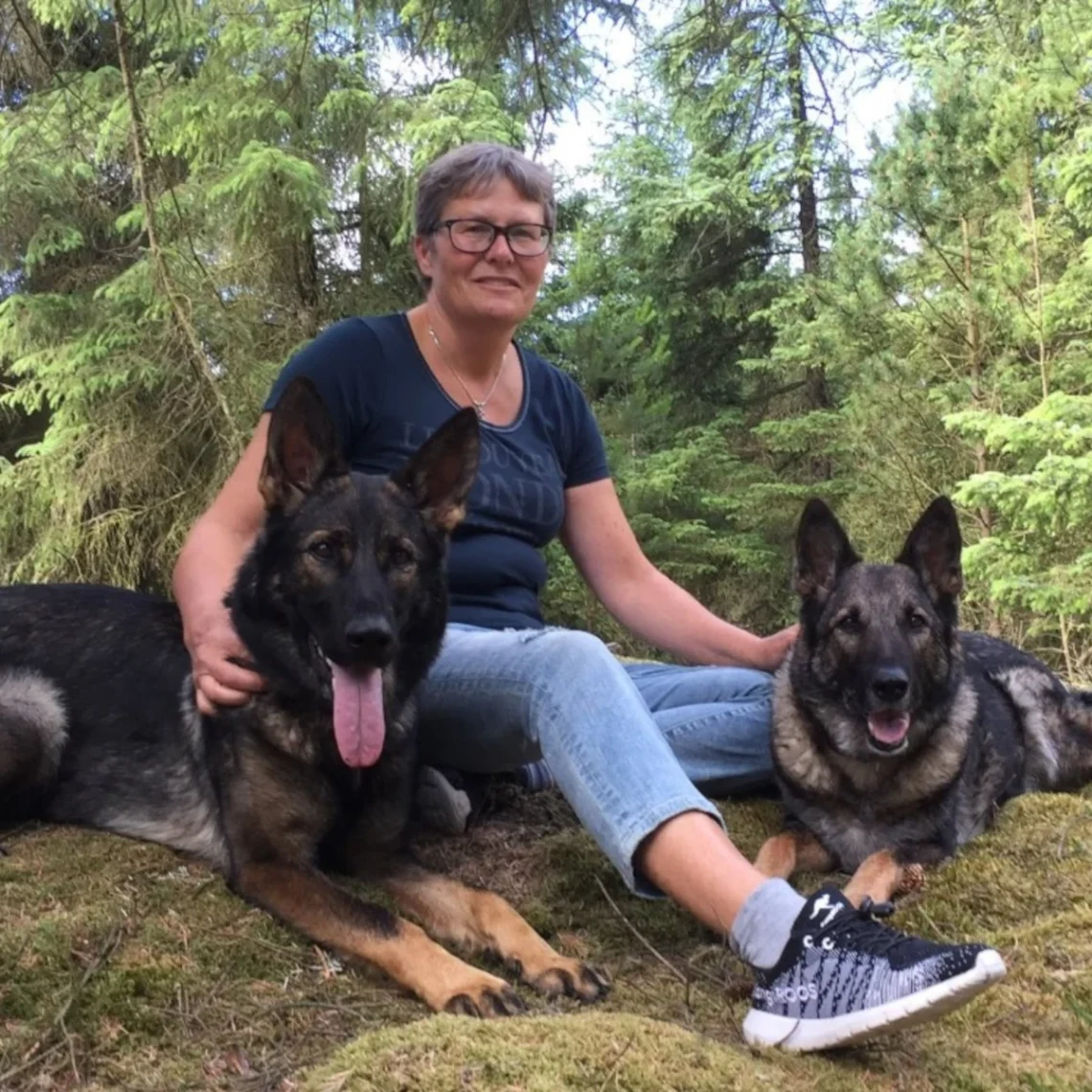

MEET LISELOTTE NIELSEN
Two-Time World Champion in IFH Tracking
Liselotte Nielsen has been part of the dog world since 1984. Over the years, she has had five German Shepherds and trained across the entire DCH programme – from the C, B, A and E classes to Nordic mantrailing, Nordic tracking and tracking dog trials.
She has competed in the DCH Danish Championships 15 times and achieved 13 podium finishes – 10 of them in tracking.
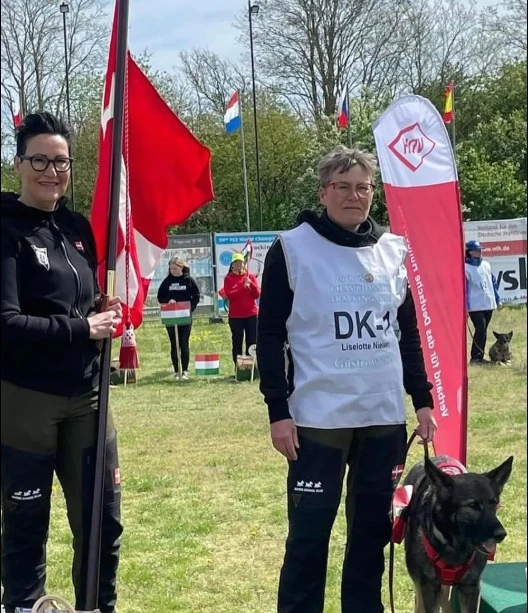
In IFH tracking, she became world champion in 2019 with Hedegårds Odille (Thilde), and again in 2021 with Hesselballe Goa.
Today, she trains with three-year-old Quinnie and continues to pursue new goals at the highest competitive level.
“That becomes a way of life.”
From the First Dog to the World Elite
It began in 1984 with a German Shepherd–Collie cross. Since then, her interest has grown into a life with working dogs, competition, travel and a special focus on tracking. Liselotte has competed at Nordic Championships in Sweden, Finland and Denmark, taken part in the DCH Elite Tournament and won the Danish Kennel Club’s Danish Championships for tracking dogs several times.
| 1984 First dog – the start of the journey | 2019 World champion with Thilde | 2021 World champion with Goa | NOW Quinnie tracking, obedience & defence |
What is tracking?
Tracking with your dog can be both a fun training activity and a competitive sport with a strong focus on precision. At international level, many nations compete for the title of the world’s best tracking dog, and the dogs are tested on both precision and endurance over large areas.
In the long IFH tracks, the dog must follow the track very precisely and find seven different objects made from various materials along the way. For Liselotte, this discipline has become her greatest strength.
PRECISION The dog must stay on the track | ENDURANCE IFH tracks can be approximately 2 km long | 7 OBJECTS Different materials on the track |
How do you get started with tracking training?
Liselotte’s advice is to start early. A dog’s nose is a fantastic tool almost from the first day the puppy has settled into its new home. Nosework also provides a different form of mental stimulation from physical exercise.
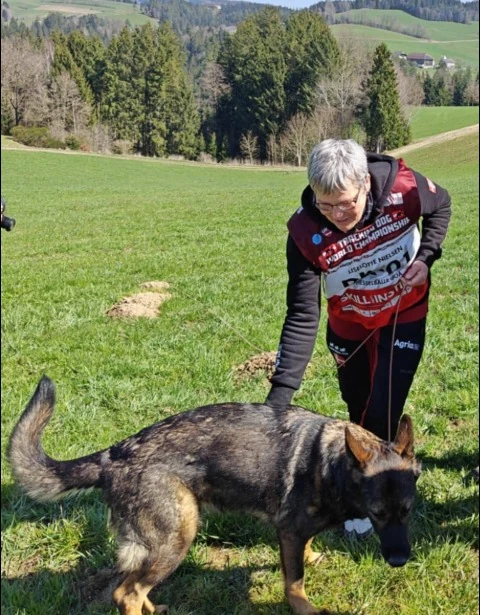
START SIMPLY
A starting stick, some grass and small treats
Start with a small piece of grass and tiny pieces of sausage, or another reward your dog enjoys.
Drag your feet along the ground and place small treats where you have stepped. Ideally, they should not be visible, so the dog learns to use its nose rather than its eyes.
Liselotte recommends starting with the wind behind you, so the dog searches low to the ground and follows the scent.
Tracking is flexible to practise because it does not require helpers – you can fit it in whenever you have the time.
““It is like learning to drive: make a good, consistent start – and the dog will never forget it.”
How do you develop tracking skills – and improve?
Once the dog has received good training and can walk in a focused manner while searching for treats, Liselotte gradually increases the distance between the rewards. This is when the dog really learns to trust its nose and stay precisely on the track.
“For both types of track, there should always be something tasty on the trail to maintain motivation. We do not work for free either.”
LISELOTTE NIELSEN
From treats to a reliable track
Once the dog can follow short stretches confidently without treats, you can begin changing direction. The handler must know exactly where the track lies so the dog can be guided correctly. If you are training for competition, the aim is for the dog to work on the track itself at all times. If it leaves the track, it is the handler’s job to help it get back.
If tracking is primarily for enrichment and fun, you can set your own boundaries for what you are willing to accept. For Liselotte, the most important thing is that the dog enjoys the task, receives mental stimulation and develops from one session to the next.
Next chapter: Quinnie
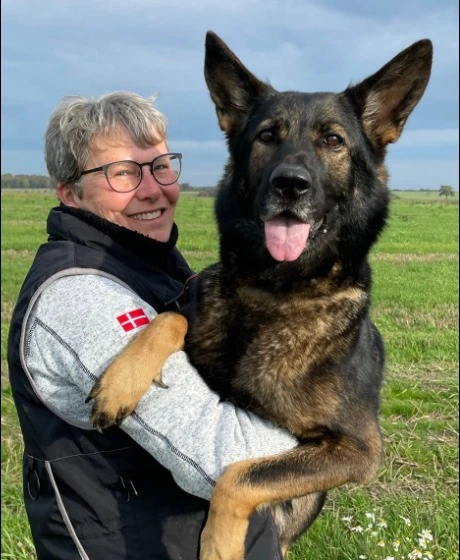
Today, Liselotte trains three-year-old Quinnie at the German Shepherd Dog Club, where they work on tracking, obedience and protection work at a high competitive level. Once that part of the training is in place, the plan is for Quinnie to also compete in IFH tracking – like Liselotte’s previous dogs.
Quinnie still lacks some of the calmness required for long tracks, but Liselotte hopes and expects it will come with age and experience. Meanwhile, at the age of 10, Hesselballe Goa is now enjoying retirement after a career that included winning the IFH tracking world championship in 2021.
“I am constantly setting myself new goals, and I am delighted when I achieve them. They can be both big and small goals.
LISELOTTE NIELSEN

Three quick questions with Liselotte
1. What do you like most about tracking with your dog?
I enjoy the freedom of deciding for myself when I feel like it and have the time. There are so many beautiful experiences to be had in nature out on the tracking grounds. And then there is the social side: following each other’s tracks, drinking coffee while the tracks are waiting, and sharing our experiences.
And, of course, there is the development of the dog’s tracking work: seeing progress, challenging the dog, helping it solve the tasks and watching its confidence and intensity grow.

2. What has been your best experience?
I don’t think there is one particular experience that stands out as the best. Of course, becoming world champion twice with two different dogs is a huge achievement – and the first time was absolutely fantastic. But a breakthrough in training after being stuck can also be a great experience.
Tracking has also taken me abroad, given me friendships spanning the world and led to courses where I have shared knowledge both in Denmark and internationally. It becomes a way of life.
| 3. What keeps you going? “I am competitive by nature, and dog sports are a major part of my life. I am constantly setting myself new goals – big and small – and I am delighted when I achieve them. And the people I train with and meet in the clubs mean an incredible amount to me. |
About Liselotte Nielsen
Liselotte has been active in dog sports since 1984. She has competed in the DCH Danish Championships 15 times, achieving 13 podium finishes, competed at Nordic Championships and become IFH tracking world champion twice with two different dogs. Today, she continues with Quinnie – driven by new goals, her love of dogs and the community surrounding the sport.